
Goals Aesthetics & Plastic Surgery · Crisis and reputation management · 2024
You cannot reassure your way out of a safety question.
Cosmetic surgery is a category where the press has already decided what the story is. A practice under that kind of scrutiny has exactly one move available that works, and it is not a statement about commitment to patient care. It is publishing numbers somebody can check.
- Client
- Goals Aesthetics & Plastic Surgery
- Role
- Crisis and reputation management, media relations, channel architecture
- Category
- Cosmetic and plastic surgery
- Markets
- New York, Atlanta, national via wire
The problem
The category had already written the story.
Cosmetic surgery in 2024 was one of the most adversarially covered consumer categories in American media. Safety coverage was routine, patient-outcome journalism was active, and a professional interest group was working journalists directly on the subject. Any practice in the category was pitching into a room that had its lede written before the call started.
Goals arrived with the additional constraint that shapes everything else on this page: the obvious spokesperson was not available. In a health category, the credible voice is the surgeon, and broadcast desks will not book a clinical segment without one. Losing that voice does not reduce the brief. It removes the standard tool for answering it.
So the engagement had to answer a medical-credibility question without a medical spokesperson, in a category predisposed to disbelieve the answer.

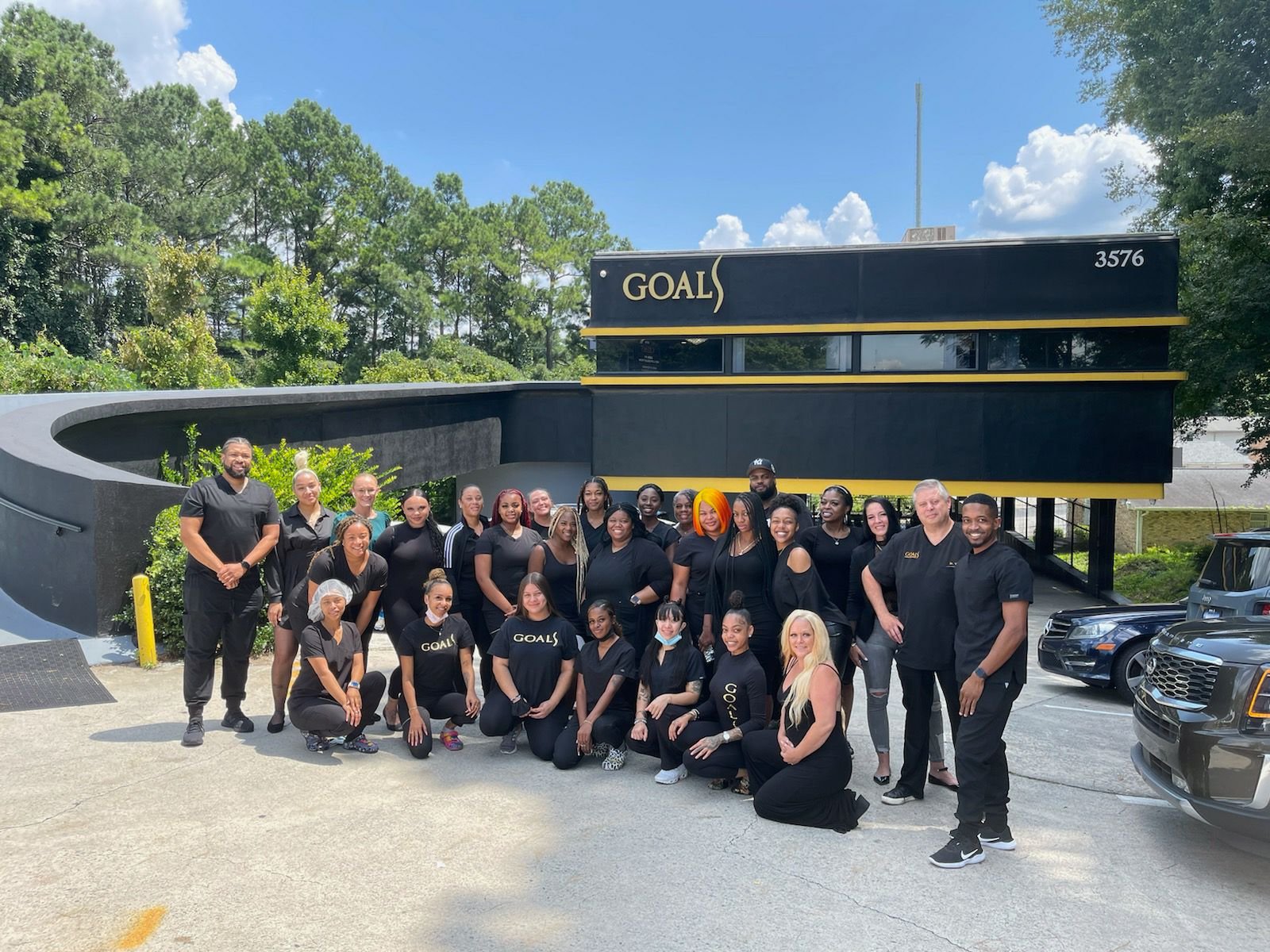
When the press has decided what you are, adjectives are worthless. Only numbers move.
The asset · 19 June 2024
We did not write a statement about safety. We published the limits.
The centrepiece of the engagement was a release titled Goals Plastic Surgery Enhances Commitment to Patient Safety and Education. Almost every crisis release in any category is a paragraph of reassurance and a quote about how seriously the company takes things. This one carried operational specifics a reporter could hold the practice to.
| Patient BMI | Maximum treatment areas per session |
|---|---|
| Under 32 | Up to 12 areas, including 360-degree liposuction |
| 32 to 38 | Up to 6 areas, either the entire front or the full back |
| Over 38 | Up to 4 areas |
That table is the whole argument. A practice that publishes a cap has created a standard it can be measured against, and a reporter who writes about the category afterwards has something concrete to quote. A practice that publishes an adjective has created nothing.
- An anaesthesia position, with a stated reason
- The release set out the practice’s advocacy of local anaesthesia over general, on the stated rationale of reducing fat embolism risk and keeping the patient conscious and able to confirm the surgeon performs the procedure. A position with a mechanism behind it survives questioning. A preference does not.
- A proposed industry registry
- The release proposed a cross-clinic database to flag at-risk patients who had been declined elsewhere, framed as an extension of existing professional-body registry infrastructure. This was the practice’s own proposal rather than an adopted standard, and it is described that way here because it was never anything else.
- Positioning alongside the professional body
- The release stated the practice’s support for The Aesthetic Society and described the Society’s patient-safety app. It did not claim the Society had endorsed the practice’s own protocols, and this page does not either. A claim of endorsement is checkable in one phone call, and a claim of alignment in spirit is not a claim at all.
The spokesperson
Build the voice you are allowed to use.
With the founding surgeon unavailable as a spokesperson, the engagement built one from scratch around the practice’s chief operating officer. Every quote in the June release is his. The August founder feature in The Knockturnal is his, and it repeats the same two positions the release established, on anaesthesia and on individual health assessment over a single number.
That consistency is the point. A spokesperson built in a crisis has no track record, so the only credibility available is repetition: say the same specific things, in the same words, in every venue, until the position is the practice’s rather than one person’s improvisation.
An operator is also a genuinely different proposition from a clinician, and in some ways a better one for this brief. A surgeon defends a procedure. An operator can talk about protocol, screening and what the practice will refuse to do, which is the conversation the category actually needed to have.
A spokesperson you cannot use is not a spokesperson. Build the one you can.
The architecture
Facebook acquires patients. Instagram gets attention. Stop asking either to do both.
The second half of this engagement had nothing to do with crisis, and it is the part most practices get wrong. Aesthetics brands run one social strategy across every platform, post the same transformation content everywhere, and then wonder why the follower count climbs and the consult calendar does not.
Those are two different audiences with two different intentions, and they need two different channels.
- Facebook, acquisition
- A dedicated group built as the serious end of the funnel. Somebody researching a procedure wants other patients’ accounts, detail, recovery timelines and the chance to ask a question without an audience. That behaviour is native to a group and almost impossible in a feed. The group was built, it went live, and it is still running.
- Instagram, attention
- Culture, entertainment and reach. Instagram is where the brand is seen rather than where it is evaluated, and treating it as a top-of-funnel awareness channel frees it to be interesting instead of clinical. It stops carrying a conversion burden it was never going to bear.
- The website
- Revamped as the destination both channels point at, so a visitor arriving from either had somewhere coherent to land. A channel split is worth nothing if both routes end at the same unconvincing page.
This is the piece of the engagement most transferable to any founder-led healthcare practice, and it costs nothing but discipline. Decide what each channel is for, then stop measuring them against each other. A group with a thousand engaged researchers is worth more to a surgical practice than a hundred thousand followers who came for the before-and-afters.
The number
Five verified syndications, and no impressions figure.
We count impressions only where a publisher, station or rating service states an audience figure. On this engagement none does, so this page carries no impressions total. What follows is what can actually be verified.
| Outlet | Placement | Position |
|---|---|---|
| KTLA, Los Angeles | Patient safety release, syndicated | Live, verified |
| WAVY, Norfolk | Patient safety release, syndicated | Live, verified |
| WHO 13, Des Moines | Patient safety release, syndicated | Live, verified |
| WLNS, Lansing | Patient safety release, syndicated | Live, verified |
| WRBL, Columbus GA | Patient safety release, syndicated | Live, verified |
| The Knockturnal | Founder and operator feature, August 2024 | Live, verified |
| Wire distribution | The wire service publishes no per-release audience or pickup metric, by its own stated policy. The full syndication list sits in the client’s distribution report. Nothing is estimated in its place. | Not counted |
| Affiliate site audiences | No station publishes a stated monthly web audience. Rate cards requested. | Not counted |
Five affiliate syndications is a modest number and we print it as one. The result of this engagement is not reach. It is that a practice in an adversarially covered category went on the public record with specific, checkable operational limits, and did it with a spokesperson built for the purpose.
What it cost
The honest part.
- The engagement was mis-scoped at the start
- It was sold and planned as reputation enhancement. It was an acute crisis from day one, and those are different disciplines with different timelines, different deliverables and different definitions of success. Our own mid-engagement report says as much: this was a conversation that should have happened at the beginning.
- Broadcast did not convert
- A full strategy was built across two markets and produced no bookings. The reason is structural and was visible in advance: a clinical segment needs a clinician on camera, and no amount of pitching substitutes for the person the desk is actually asking for. That should have been priced into the plan rather than discovered inside it.
- Reporting cadence slipped under load
- On an account moving this fast, the client’s confidence tracks the reporting rhythm more than it tracks the results, and letting the rhythm go is how a working relationship gets harder than the work.
Scope the crisis you have, not the campaign you sold.
Why it worked
Three things that transfer to any regulated category.
- Publish a number
- A cap, a threshold, a protocol, a refusal criterion. Anything specific enough that somebody could catch you breaking it. Reassurance is unfalsifiable, which is exactly why nobody believes it. A commitment that can be checked is the only kind that counts as evidence.
- Never claim an endorsement you do not have
- Supporting a professional body and being endorsed by one are different sentences, and the gap between them is a phone call a journalist will make. Say the true, smaller thing. It survives, and the larger claim would not have.
- Separate the channels by job
- Awareness and acquisition are different functions with different content, different cadence and different success measures. Running one strategy across both guarantees the acquisition channel underperforms, because it is being optimised against a metric that belongs to the other one.
In a category the press already distrusts, specificity is the only credibility available.
Playbook MG is a boutique public relations and influencer agency in Brooklyn, working with culture-rooted brands and founders across healthcare, beauty, food and beverage, fashion, entertainment, arts and nonprofits. This engagement covered crisis and reputation management, media relations, press release authorship and distribution, channel architecture and owned content.
All case studiesPlaybook MG · Industry City, Brooklyn · Placements verified live at time of publication · No impressions claimed where no publisher states an audience · As of September 2026