Most influencer budgets buy reach and hope some of it overlaps with a buyer. We select for overlap first, contract the deliverables, and tie them to revenue. Internally we call this work cultural influence, because the point is not the creator. It is whether your brand ends up belonging somewhere.
The standard model pays for reach. You buy a creator with a large audience, you get a post, and you hope some fraction of that audience cares. Most of the time the audience overlap with your actual buyer is small and nobody measures it.
We select for proximity instead. The question is not how many people follow someone. It is whether the people who follow them are the people who buy what you sell. A creator with 12,000 of the right followers will outperform one with 400,000 of the wrong ones, every time.
Then we contract it properly. Deliverables, usage rights, exclusivity windows and a revenue-linked measure, written down before anyone posts. Handshake influencer deals are where most of this budget disappears.
The creator network behind this is not rented. It was built over twenty years by Jean Jones, VP Records brand manager turned founder, and extended through the festival and production work the team runs every season, from Brooklyn to Canada to Thailand.
Taking what you already made and putting spend and sequencing behind the pieces that earn it. Most brands are sitting on content that died inside 48 hours because nobody was watching which posts actually moved someone. We find those, cut them for each platform, and back the ones with evidence rather than the ones the founder likes best.
The cheapest content you will ever run is content you have already paid to make.
Sprayground: a seeding programme that kept product moving through the hands of editors and creators between events, from a HuffPost review to an Afrojack unboxing on SOHH.
Your own channels run as a publication rather than a noticeboard. A calendar someone owns, a voice that sounds like a person, and a reason to follow you that is not a discount code. We build the formats that repeat, so the account keeps working in the weeks when nothing is launching.
Rented audiences change the rules without telling you. An owned channel is the one audience you cannot be charged for twice.
Goals Plastic Surgery: Instagram run as the attention channel, freed from a conversion job it was never going to do.
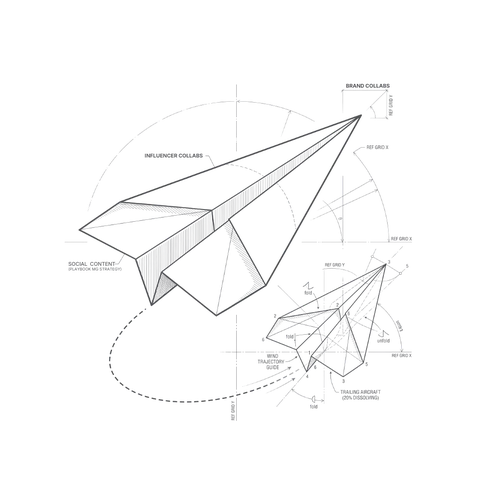
Creator and brand partnerships chosen on audience overlap and contracted on deliverables. We check whether their followers are your buyers before we approach anyone, then agree usage rights and exclusivity windows up front so the asset keeps working after the campaign closes. No handshake deals, which is where most of this budget quietly disappears.
A creator with 12,000 of the right followers beats one with 400,000 of the wrong ones, every time.
Suplmnt: social and influencer campaigns that put the bottle in view of Jay-Z, Kevin Hart and Steph Curry, and 1.7M impressions.
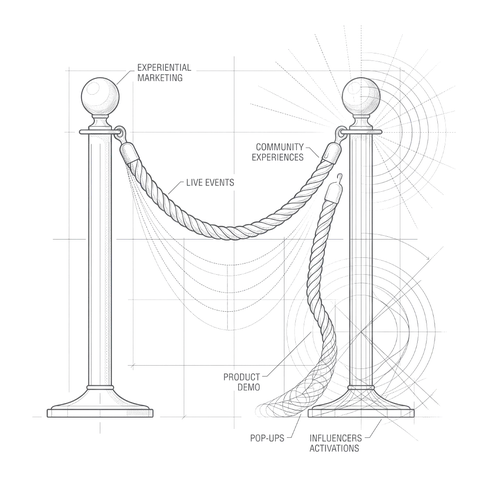
Live moments people travel for. Festival presence, pop-ups and events built so the room itself becomes the content, with press and creators briefed before the doors open. Run end to end, from partner terms to load-out, on a date your team can plan around.
An activation that produces no assets is a party. The brief starts with what leaves the room, not with what happens in it.
Sprayground: a two-floor Times Square pop-up, with the press calendar run backwards from opening day so the coverage could still send people to the door.
This is not for you if you want a celebrity name attached to a product for one post. That is a media buy, it is priced like one, and an agency is an expensive way to place it. We are useful when the goal is for a community to keep choosing you after the campaign budget stops.
Runs activations end to end, from partner terms to load-out, owning community activations and influential collaborations.
Runs content amplification and owned social, and builds campaigns with a second life rather than an end date.
Audience overlap with your buyer first, engagement quality second, follower count last. We look at who comments, not just how many, and we check whether their audience is in your market before we approach anyone.
PR earns you credibility from a third party who owes you nothing. Influencer work earns you belonging inside a community. Most brands need both, in that order, and they fail at different rungs of the ladder when only one is running.
Yes. Deliverables, timing, exclusivity windows and how long you can keep using the asset are agreed in writing before anything is produced. This is the single most common gap we find in work that was run in-house.
Yes. Brooklyn is home and where our production network is deepest, but the creator and press relationships run from Brooklyn to Canada to Thailand.
Attention, awareness, relevance, consideration. Most brands lose it at one of the four.
Get in Touch